Why EPS is not cash
EPS is not cash. Earnings per share is an accounting result. Cash is what hit the accounts. Those two can move in different directions in the same quarter, and the headline usually quotes the first one.
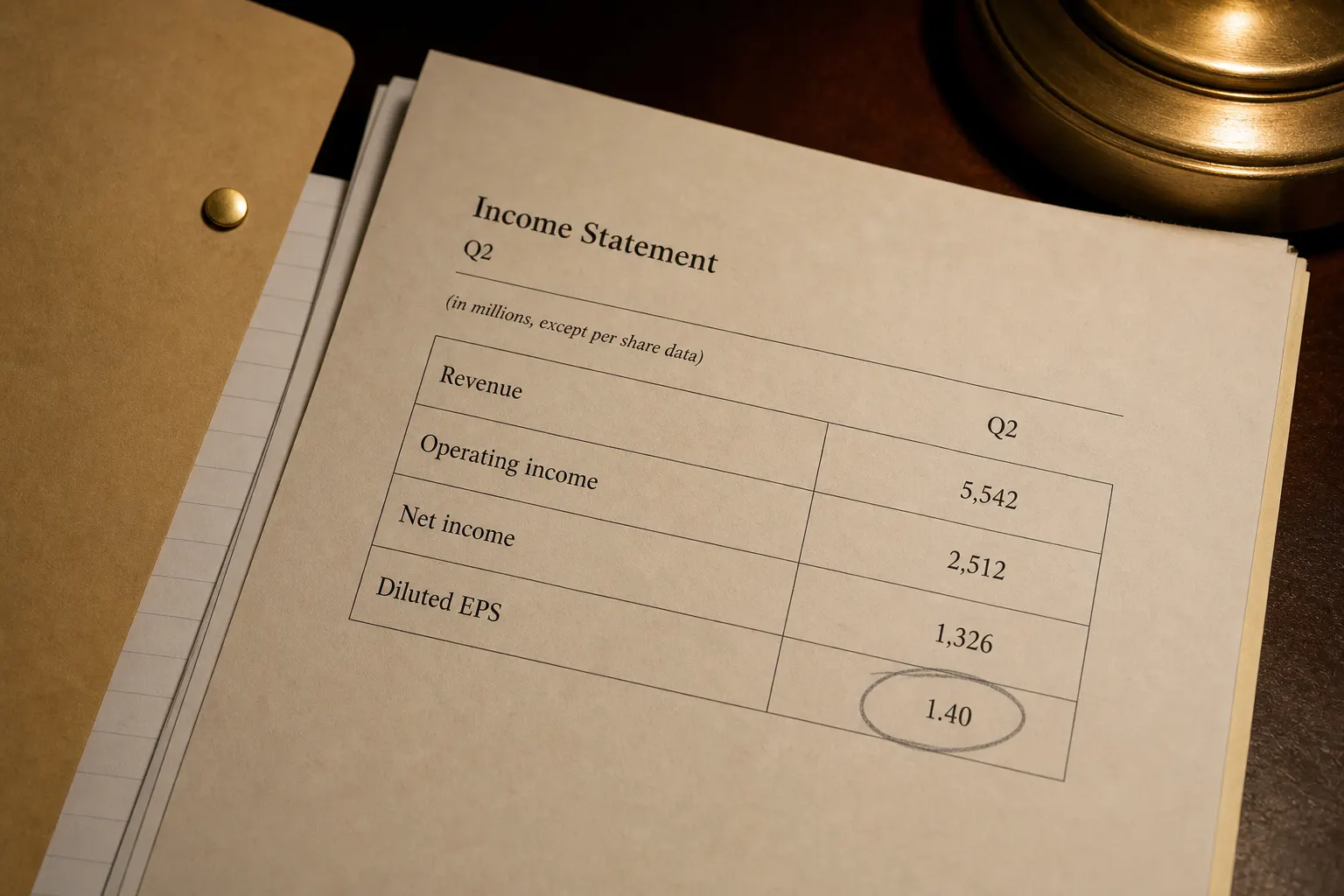
You can book a sale before the check arrives. You can take a one-time gain that never repeats. You can shrink the share count and lift EPS without a single extra dollar landing in the till. None of that is a trick, exactly. It is the difference between a result and a deposit.
This is not tax advice. It is not a personal-finance rule. It is a reading rule: name the object.
Accruals are promises written down
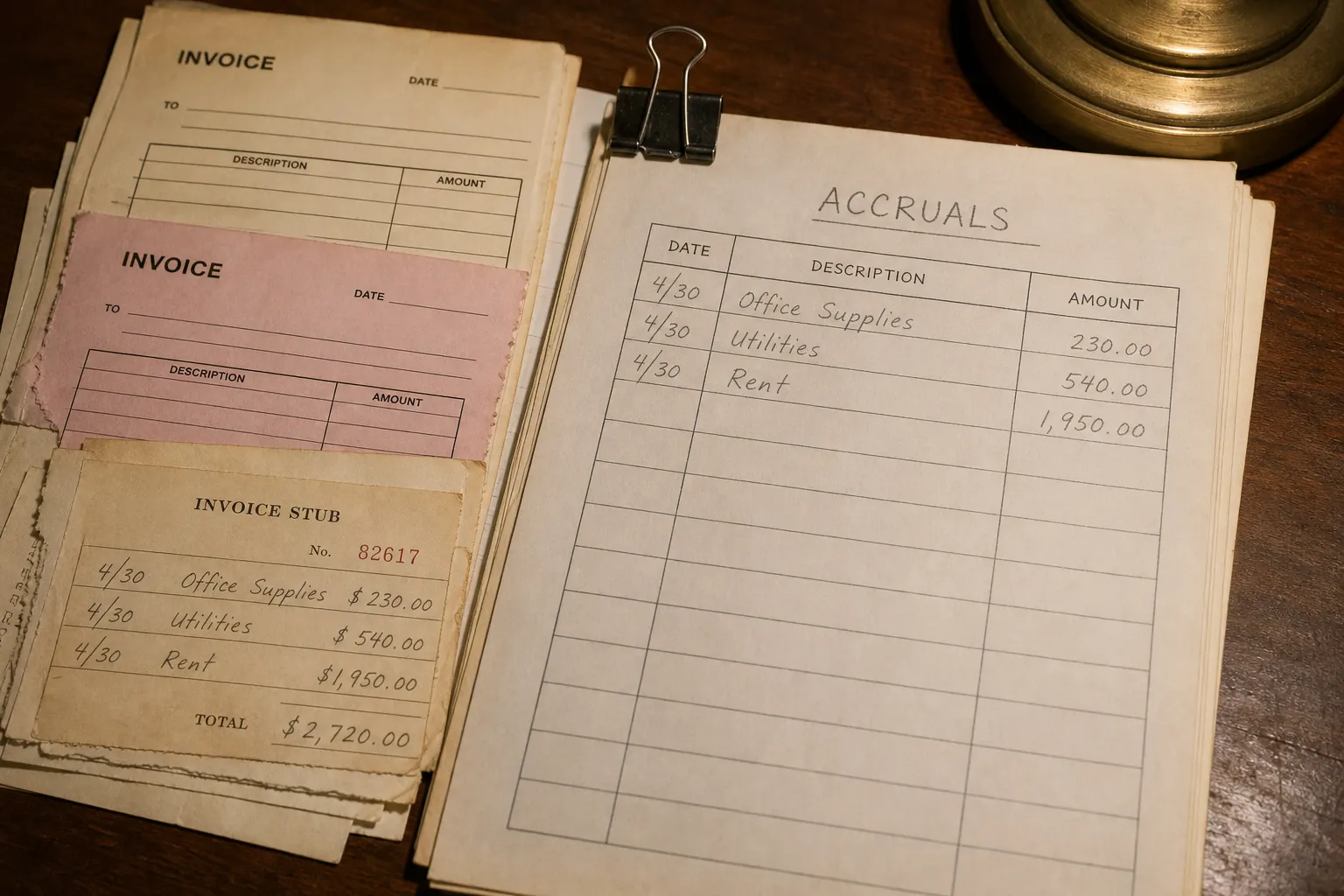
The income statement is allowed to recognize things that have not yet turned into cash. Revenue can hit before the customer pays. Expenses can hit before the bill is paid. That is the point of accrual accounting. It tries to match the period. Cash does not care about the matching.
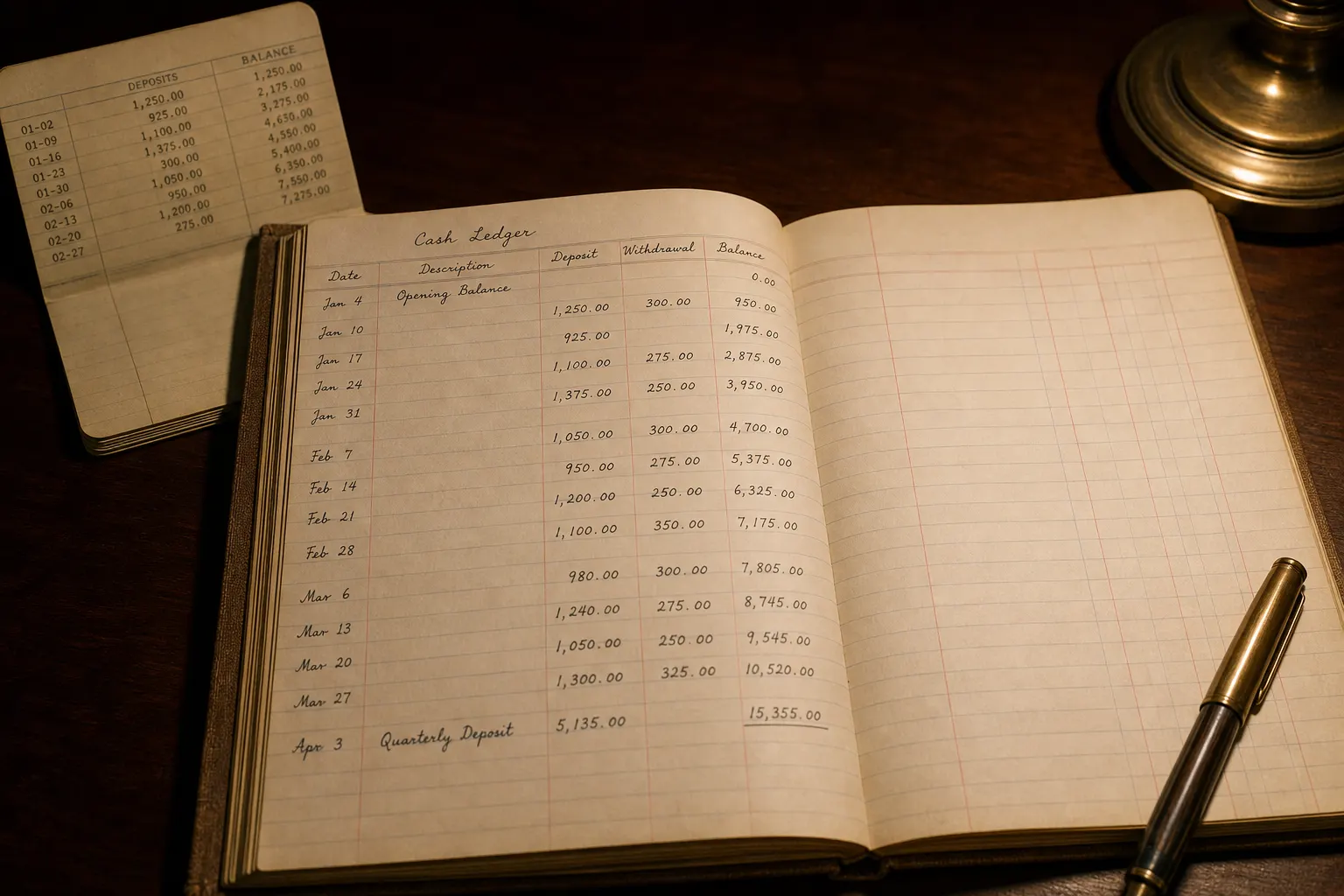
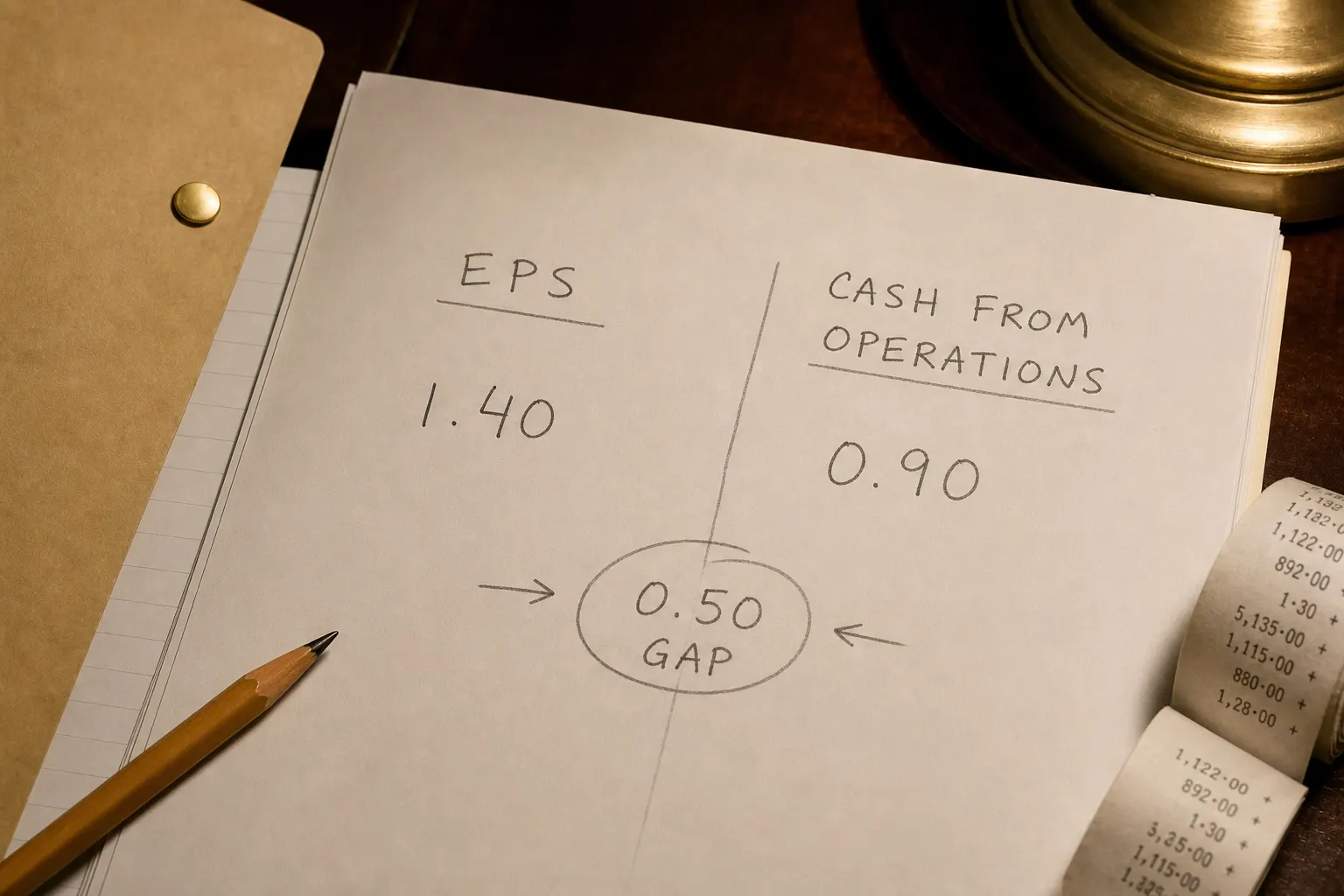
Look at two columns. Diluted EPS: 1.40. Cash from operations, on a per-share basis you sketched on the blotter: 0.90. The 1.40 is not fake. It is not the 0.90 either. If you treat them as twins, you will invent a cash story the accounts do not tell.
One-offs move the average
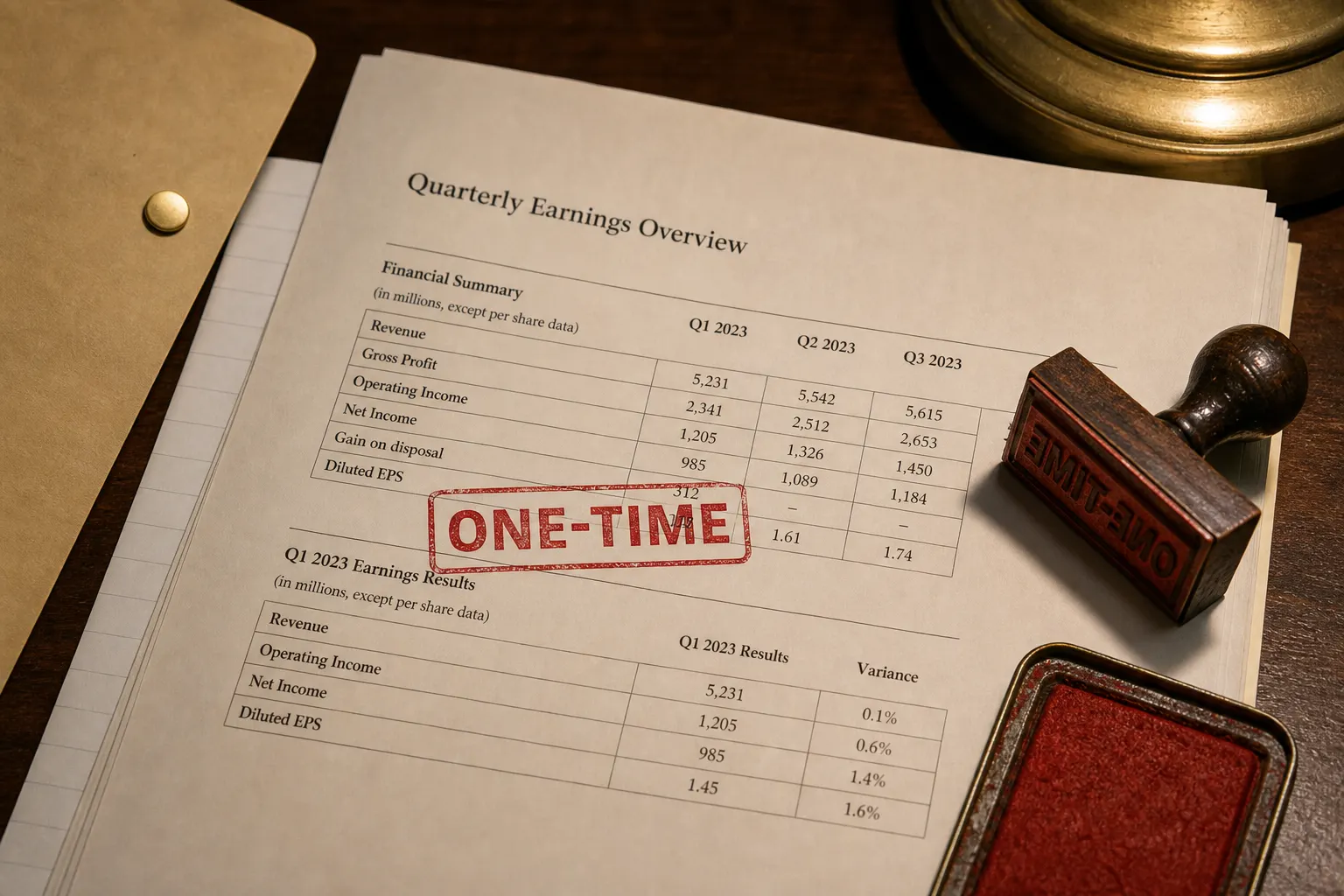
A plant sale, a legal settlement, a mark-to-market swing — one line can fatten or starve EPS for a quarter. The cash may have arrived years ago, or not at all, or in a lump that will never come back. “Record earnings” can be a one-time item wearing a tuxedo.
Buybacks change the denominator
EPS is earnings divided by shares. Shrink the shares and the same pile of earnings looks bigger per share. The company spent cash to buy the stock. The EPS line can rise while the cash drawer thins. That is arithmetic, not a morality play.
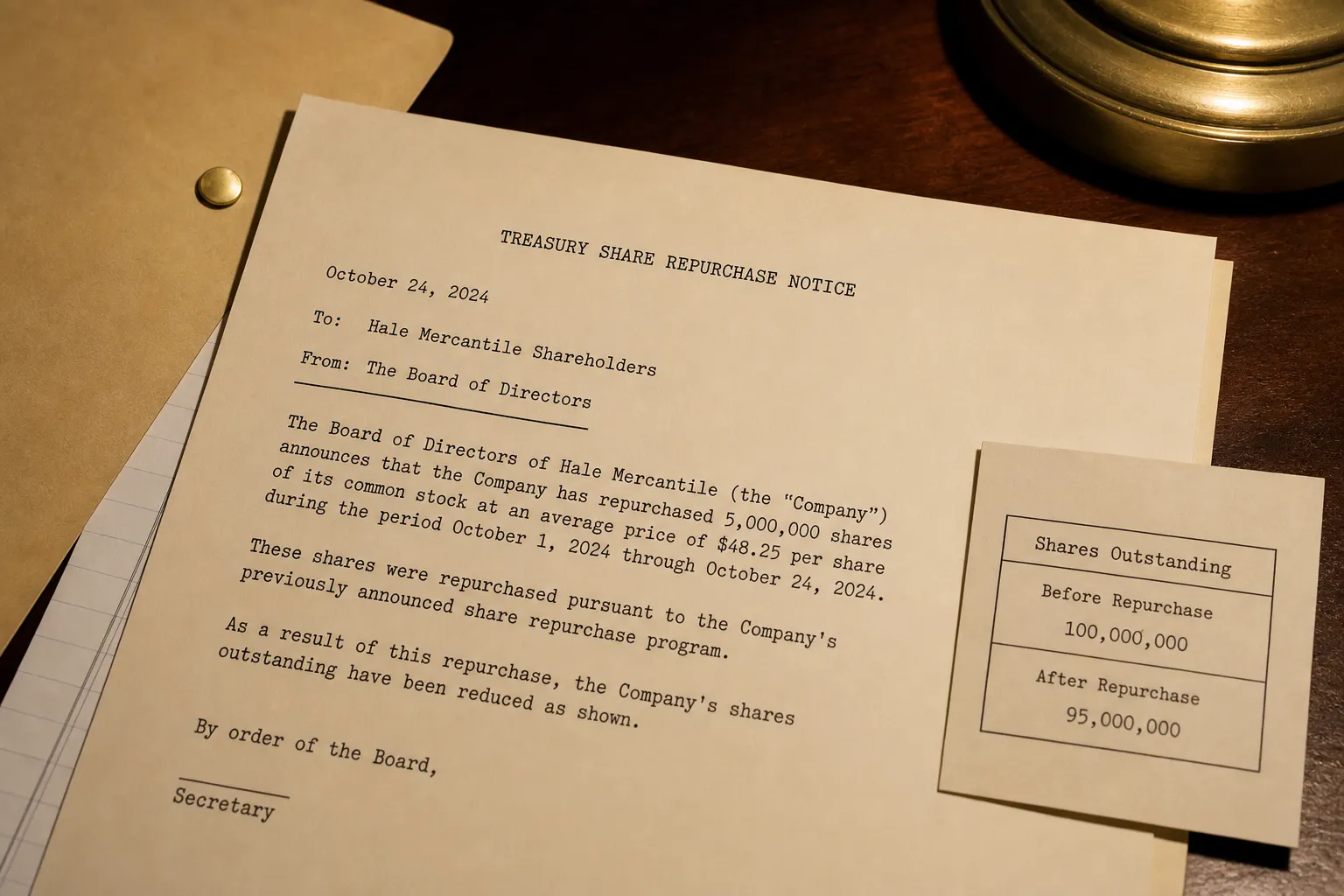
A boring pass. Net income: 140 million. Shares: 100 million. EPS: 1.40. The firm spends 50 million buying 5 million shares. Next period, if earnings stay 140, EPS is about 1.47. Nobody deposited an extra 7 cents of cash per remaining share. They spent cash and cut the count.
When someone quotes EPS as if it were money in the account, ask what actually hit the accounts. Then look at the share count. Then ask whether this quarter’s earnings include a guest who is not staying for dinner.
Educational only · Not investment advice