Why a reverse split is not a turnaround
Fewer shares. Same company. A reverse split takes ten tickets and restaples them as one. The price per share goes up because the count went down. Nobody added a customer. Nobody added cash. Nobody launched a new business. It is a relabel. People mix it with a split that “makes you richer,” and with a listing cleanup that looks like a comeback.
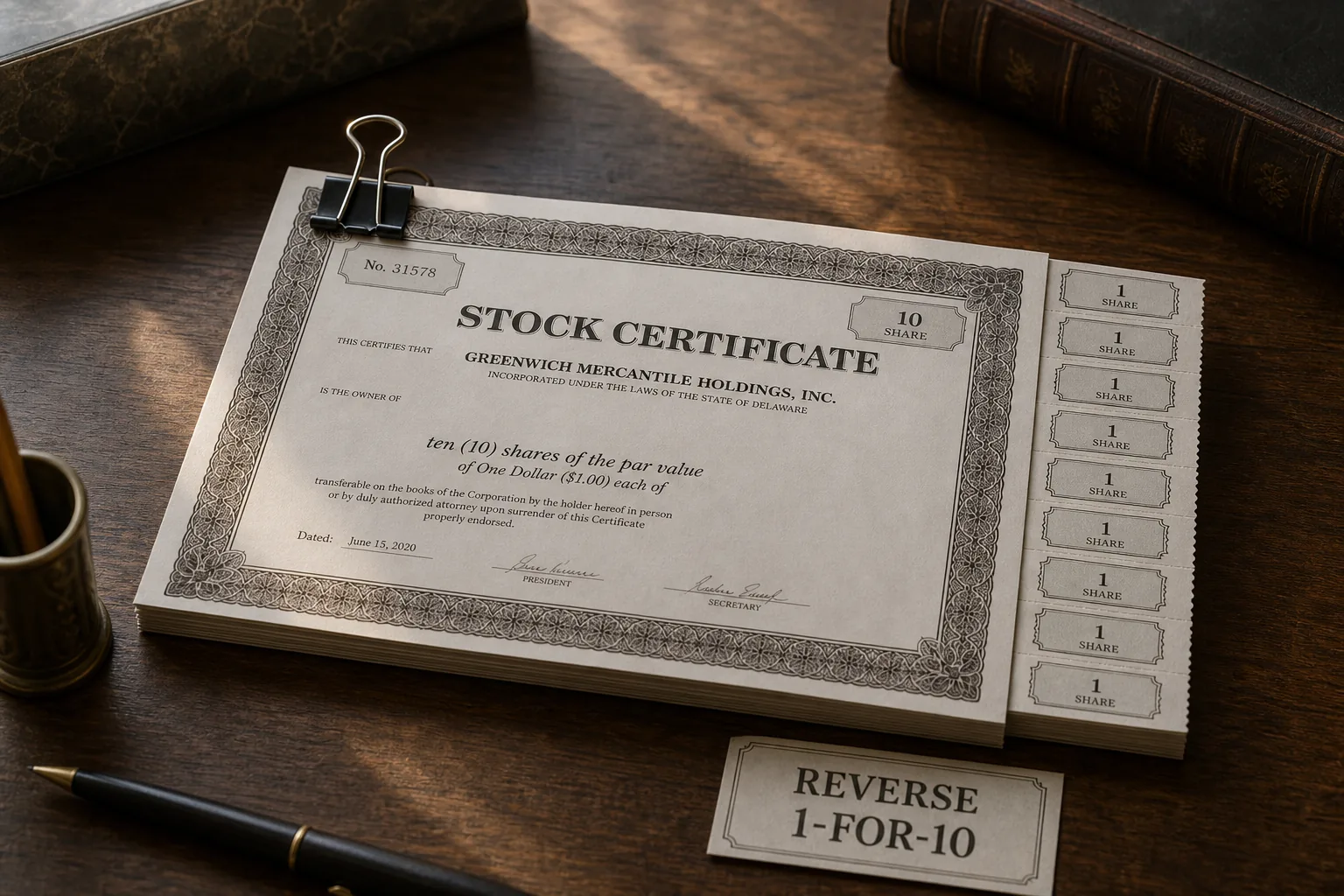
Three mix-ups. Same cut.
Not a split that makes you richer
A regular split gives you more shares and a smaller print. A reverse split gives you fewer shares and a bigger print. Both multiply one side and divide the other. At the instant of the cut, the claim is supposed to sit still.
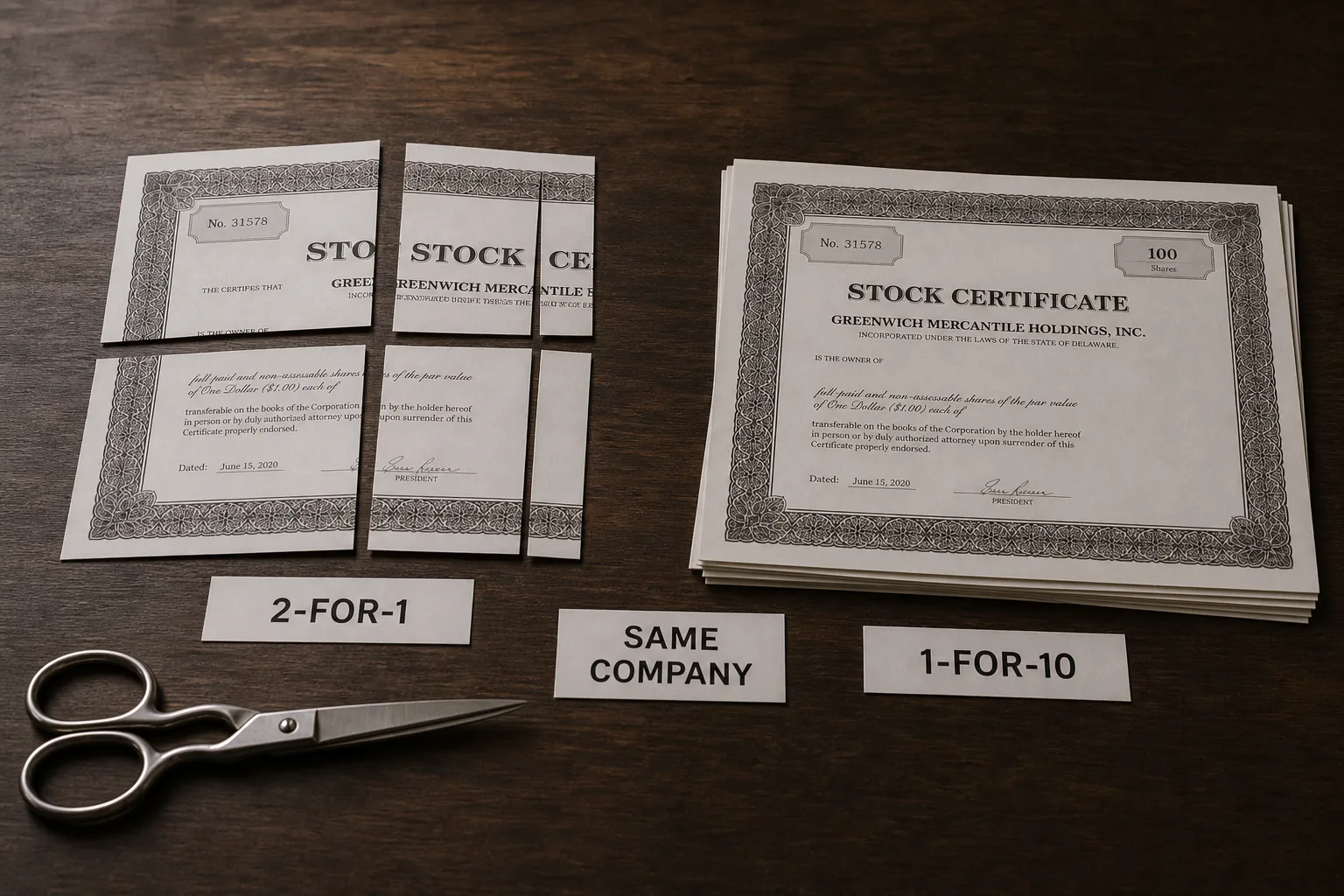
You own 1,000 shares at 2. That is 2,000. After a 1-for-10 you own 100 at 20. Still 2,000. The richer-feeling cousin is the forward split people already get wrong. This one is the same arithmetic flipped. Fewer pieces. Same pie.
If your account jumps by about 10x at the reverse moment, the screen has not applied the new price. That is a display lag, not a raise.
Leftover shares get messy. Ten-for-one is clean. Seven-for-one leaves fractions. Brokers often pay cash for the stub. That check is the leftover slice, not a bonus from a healthier firm. Options get restated so the contract stays in the same neighborhood. Housekeeping again.
Not new customers
The share count is a label on the claim. Customers, cash, and the product are the business. A reverse split does not walk anyone into the store. It does not put money in the till. It does not invent a second line of work.
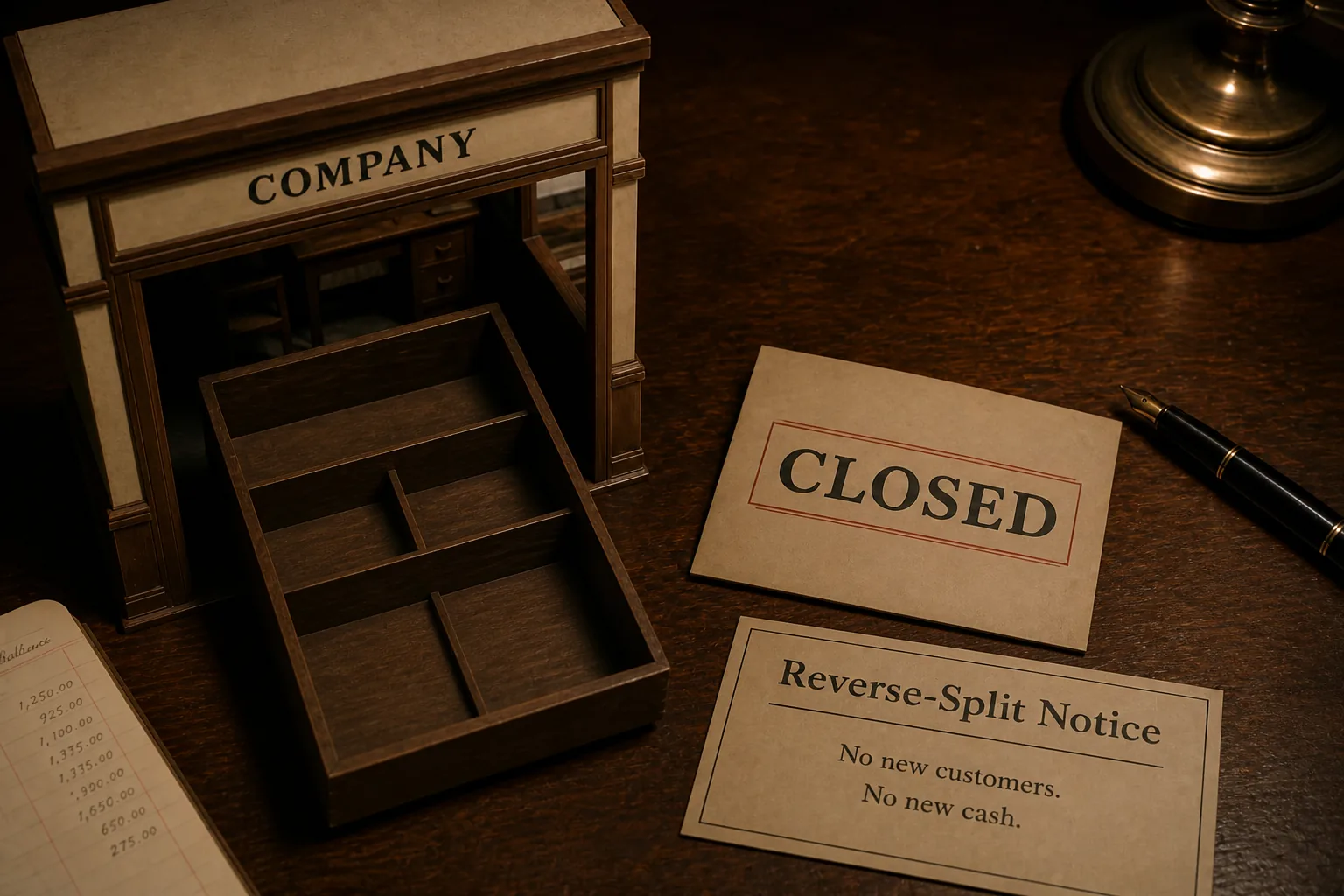
If those things improve later, they improved later. The cut did not do that job. Treat a fatter print per share as a fatter print per share. Do not treat it as a new crowd at the door.
Not a listing cleanup that means a comeback
Exchanges have a minimum bid. A name trading under a dollar can get a letter. One way to print a bigger number per share is to shrink the count. That can be housekeeping for the listing. Housekeeping is not a turnaround. A turnaround is the business getting better.
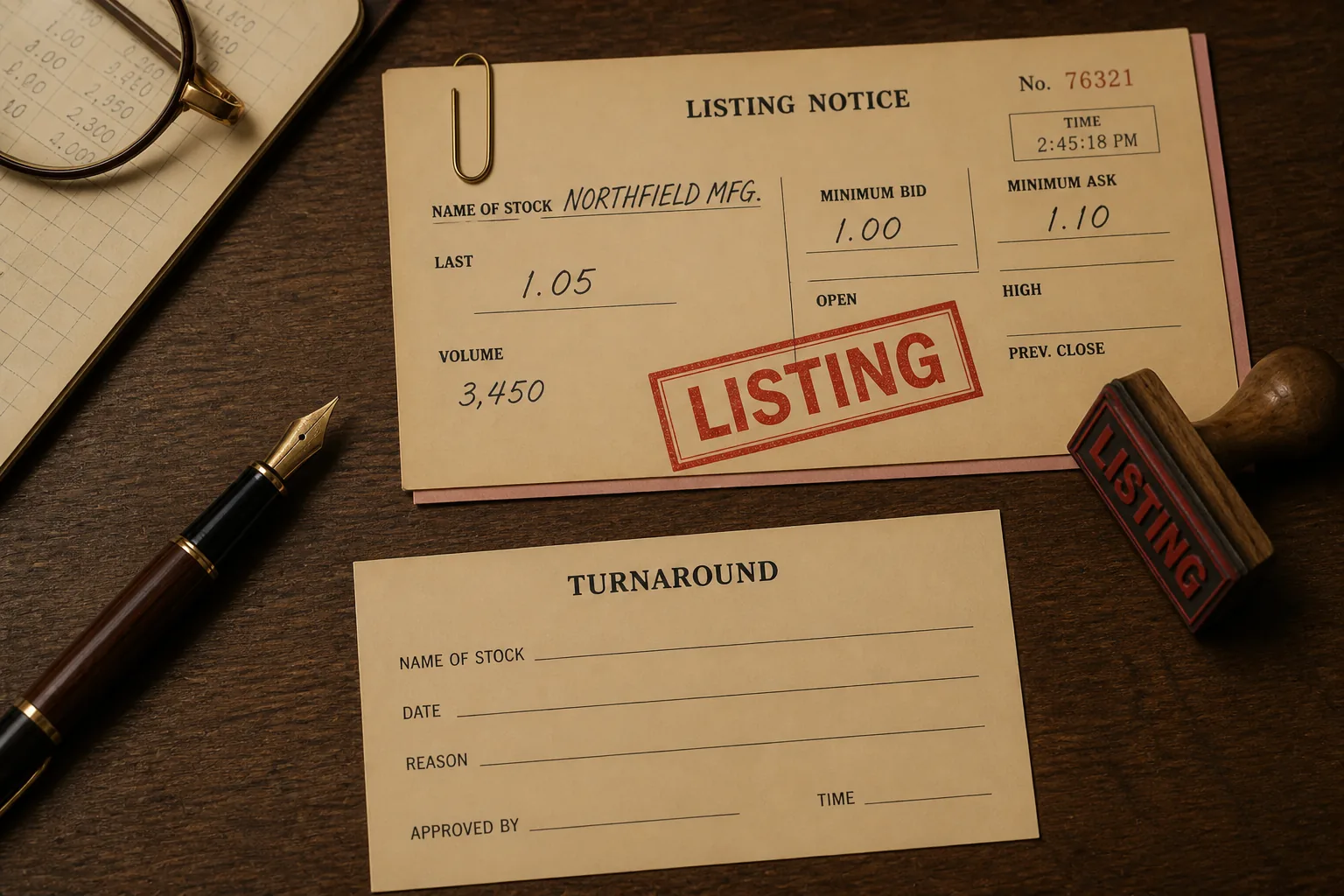
The stamp that says LISTING is a stamp about the tape and the rulebook. The unused card that says TURNAROUND is still blank. You can stay listed and still have the same customers, the same cash, and the same product. A name can also reverse-split with no listing letter in the mail. Same cut. Same missing comeback.
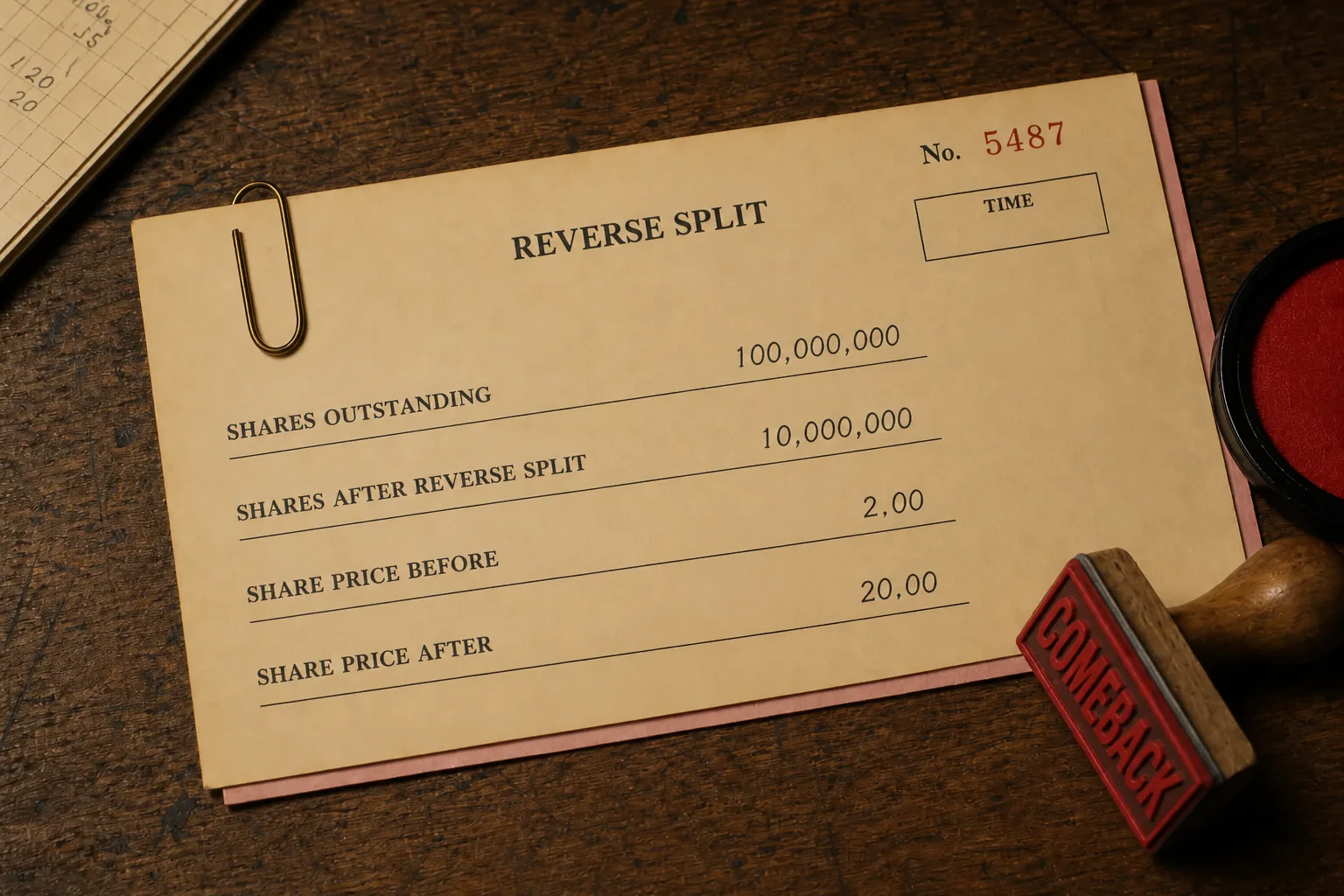
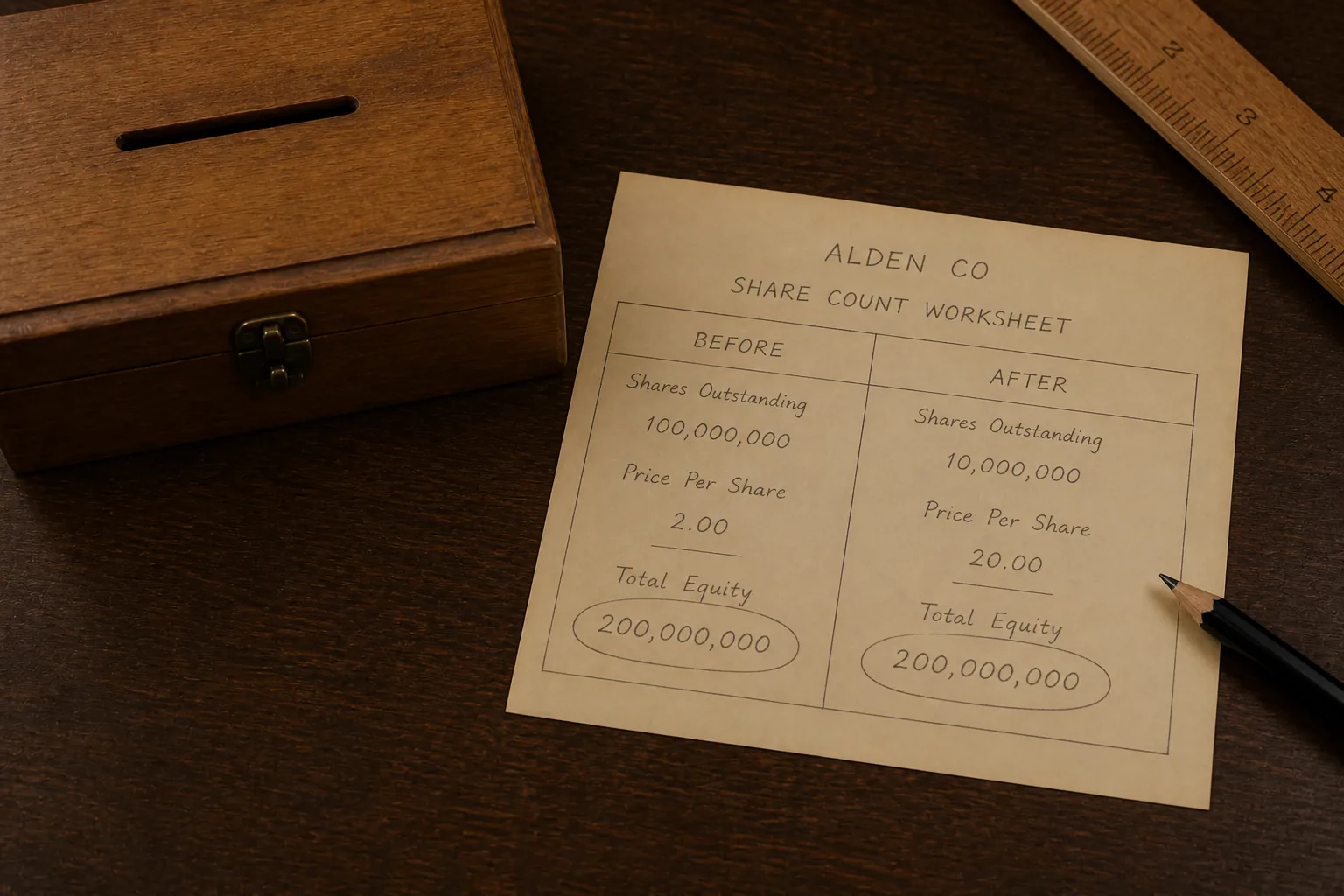
A dull pass. 100 million shares at 2. Reverse 1-for-10. 10 million shares at 20. The equity pile is still 200 million, before anyone trades. If the next bid is 21, a buyer showed up after the relabel. If the next bid is 18, the reverse did not “fail.” The cut already did its only job.
Look at customers, cash, and the product if you want a comeback story. Look at the share count if you want the relabel. Do not swap them.
Educational only · Not investment advice