Why a market order is not a price
A market order is not a price. It is a request to trade now, against whatever is sitting on the book. You do not “get the last print” by hitting market. The last sale already happened. The live bid, the live ask, and the size behind them are the quote.
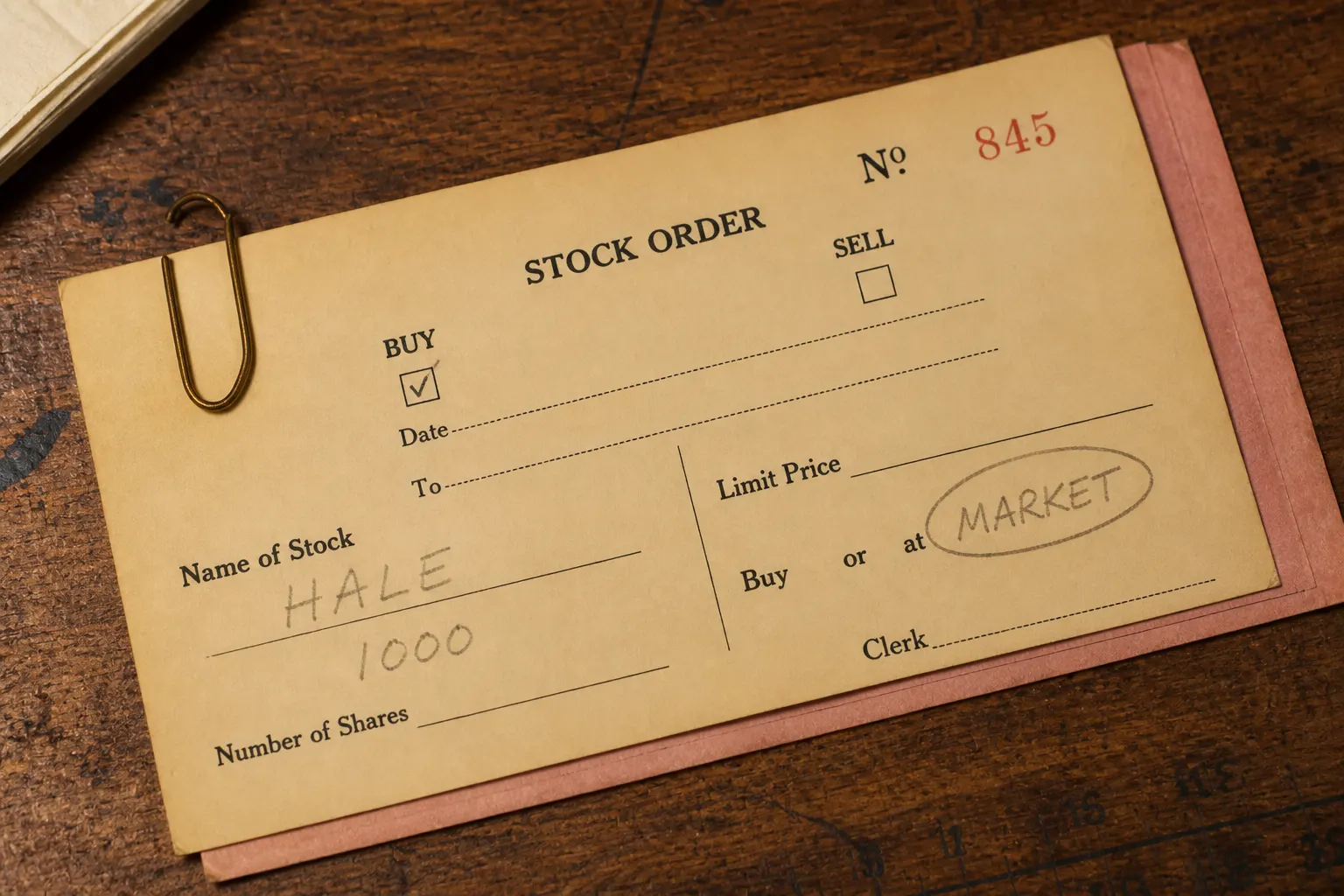
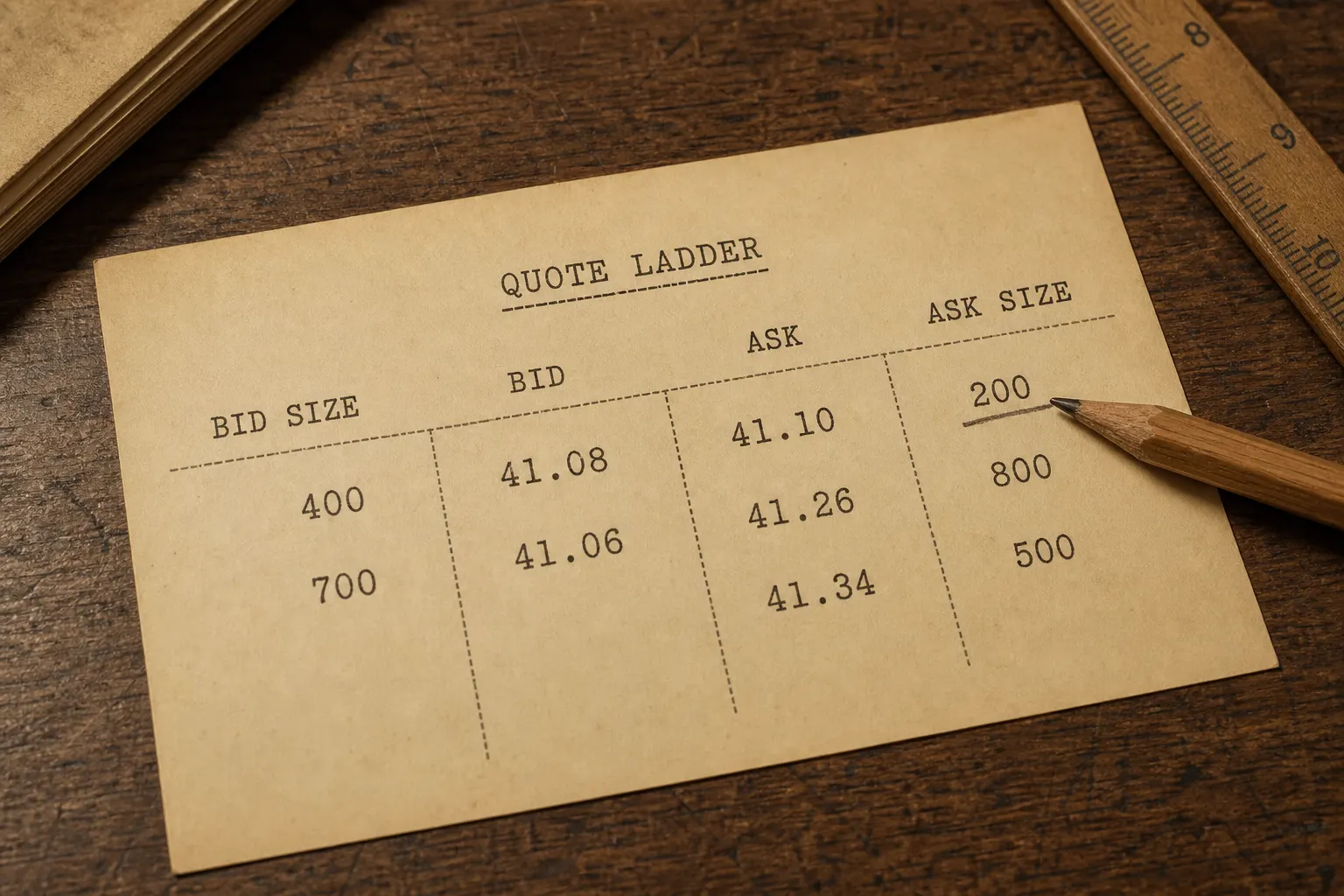
A limit names the worst price you will take. A market order leaves that line blank. It says fill me. The book decides the prices. If 200 shares are offered at 41.10 and the next 800 sit at 41.26, a market buy for 1,000 does not print at “the last trade.” It walks those two rungs, and maybe a third.
The last print can still say 41.08. That was a different pair of orders. It is not an offer to you.
The book is the menu
What you can actually buy or sell is the displayed size, then whatever is hiding behind it. A market order does not negotiate. It consumes. That is why a quiet name with a 100-share ask is a problem if you send 2,000. You will own the 100. The rest of the fill is whatever comes next.
People talk as if “market” were a number. It is a verb. The number shows up after the walk.
Last sale is a box score
Charts train the same habit as the old tape. They show prints. A print is a match that already closed. The quote is who is still willing to trade, and for how many shares. Those two objects can sit a few cents apart on a busy name and a few dollars apart on a sleepy one.
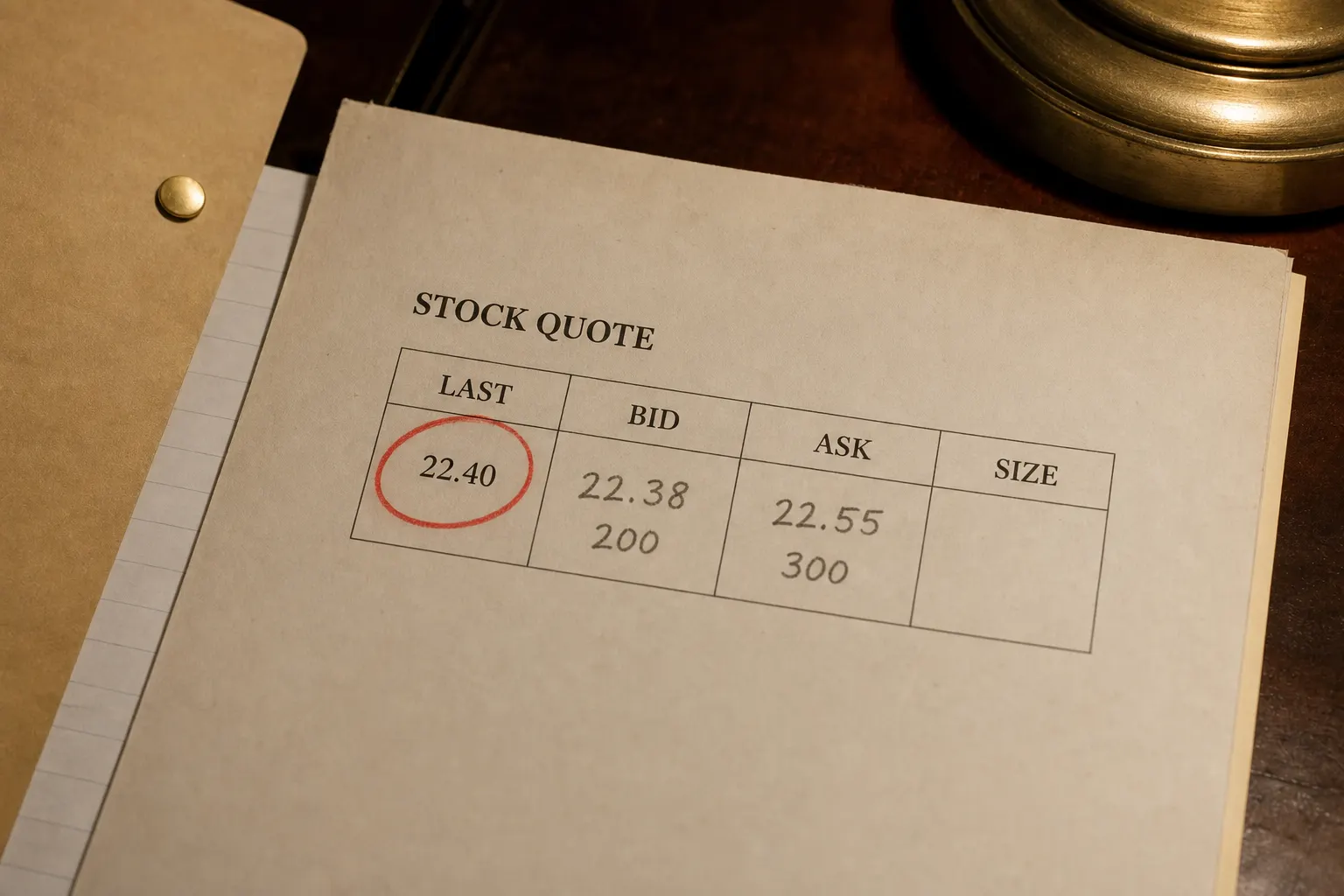
If the last sale is 22.40 on 50 shares, and the live ask is 22.55 for 300, a market buy does not get 22.40. Nobody is offering 22.40. Somebody already took it.
Size is the missing noun
A market order for 100 shares and a market order for 5,000 shares are not the same instruction in any world that has a book. The first might clear on the inside. The second walks. Your average can print away from the last-sale marker while that marker still shows the old number, because that number was a different trade.
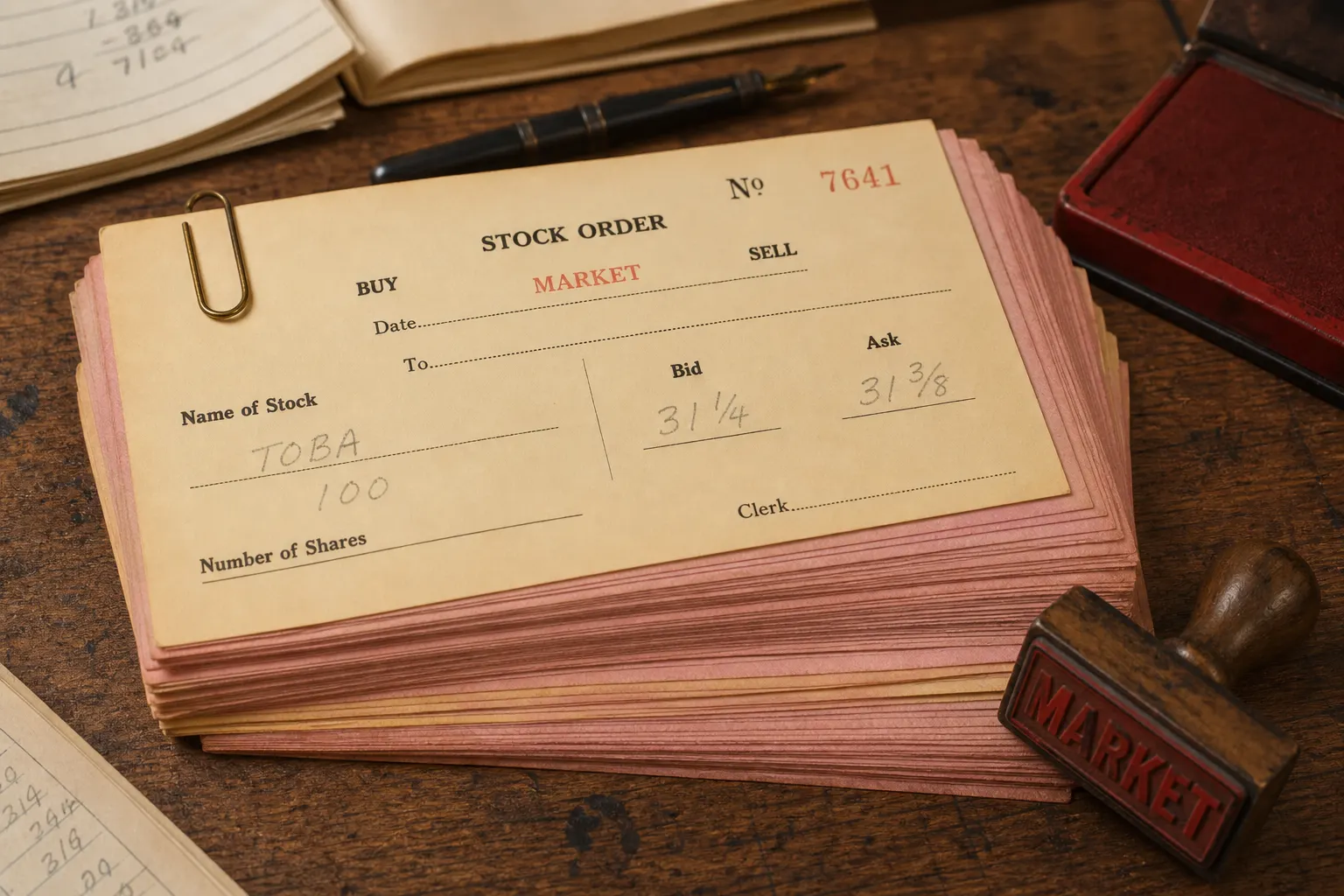
Old tickets made this boring and visible. Market. Size. No limit. The clerk did not owe you the last print. The clerk owed you the next available size.
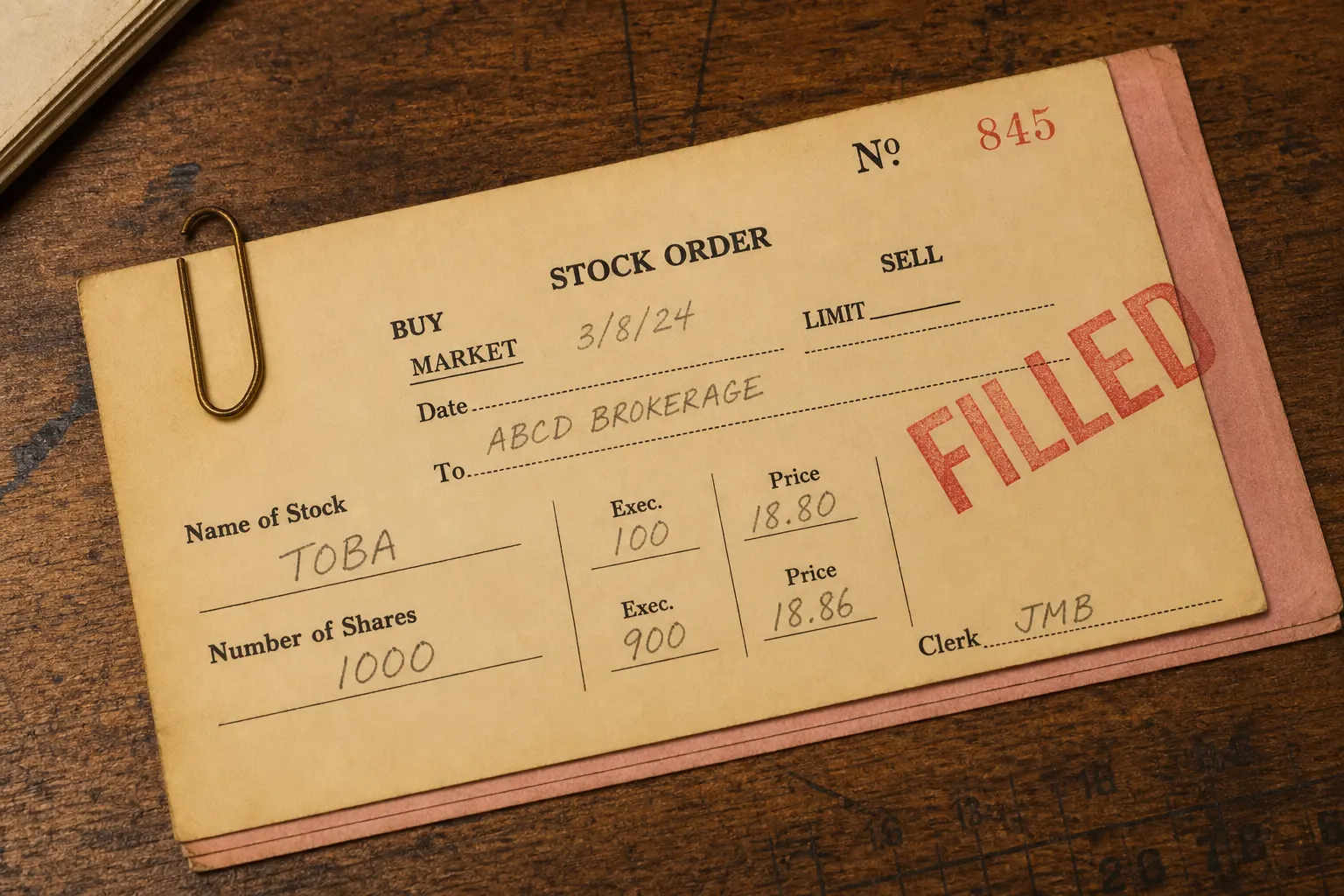
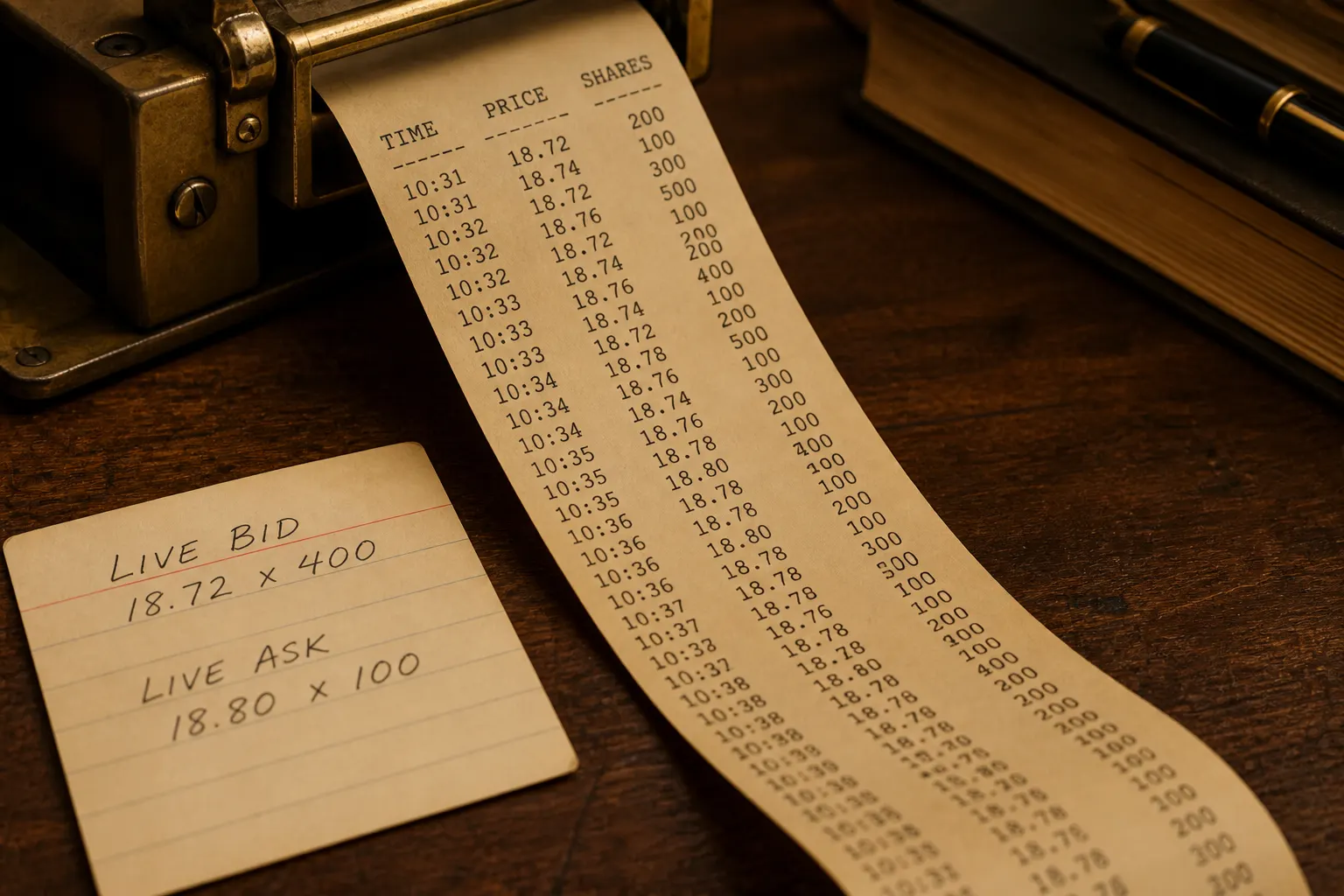
Here is a dull example. Last sale: 18.75 on 200. Live bid: 18.72 for 400. Live ask: 18.80 for 100, then 18.86 for 900.
Hit market to buy 1,000 and you are not “getting 18.75.” You take 100 at 18.80 and 900 at 18.86, unless new size appears while you walk. Hit market to sell 500 and you are not getting 18.75 either. You sell 400 at 18.72 and then you are looking for the next bid.
The last print is a memory. The quote is the offer. A market order is how you accept whatever is left.
Educational only · Not investment advice