Why a bid is not the last trade
People point at the last number on the screen and call it the price. It feels official. It is also the wrong object.
That number is a sale that already closed. Two orders met. Someone is done buying, someone is done selling, and it got written down. The bid is a different question: who is still sitting there, right now, offering to take stock off your hands.
Say the last trade was 48.20. Fine. That tells you what the last pair agreed to. It does not tell you that you can sell 400 shares at 48.20. It does not tell you a buyer is still there. It does not tell you the market is tight.
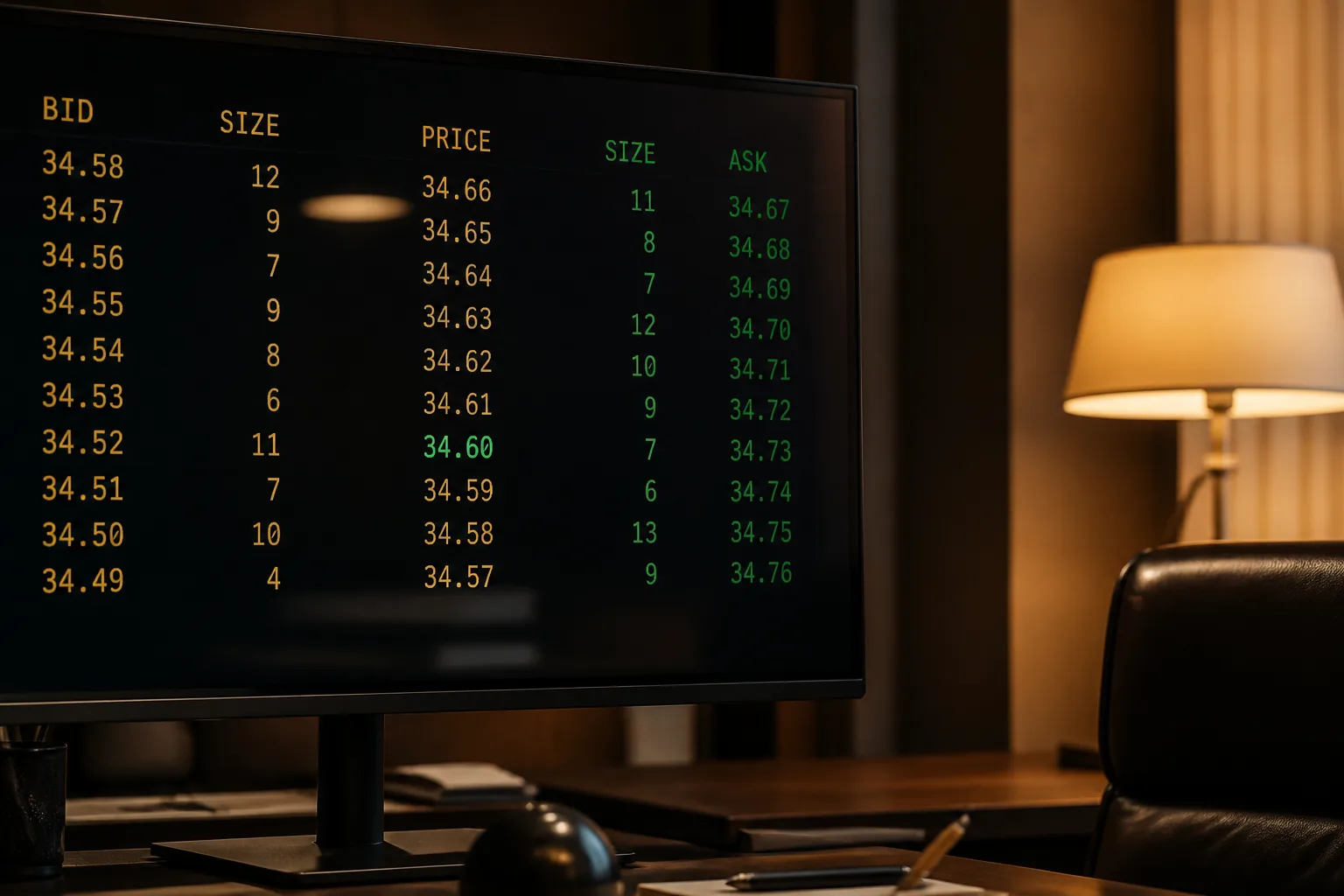
The bid is the highest live offer to buy. The ask is the lowest live offer to sell. Last trade is history. Those three numbers can look like cousins and still be three different things.
Charts make this worse
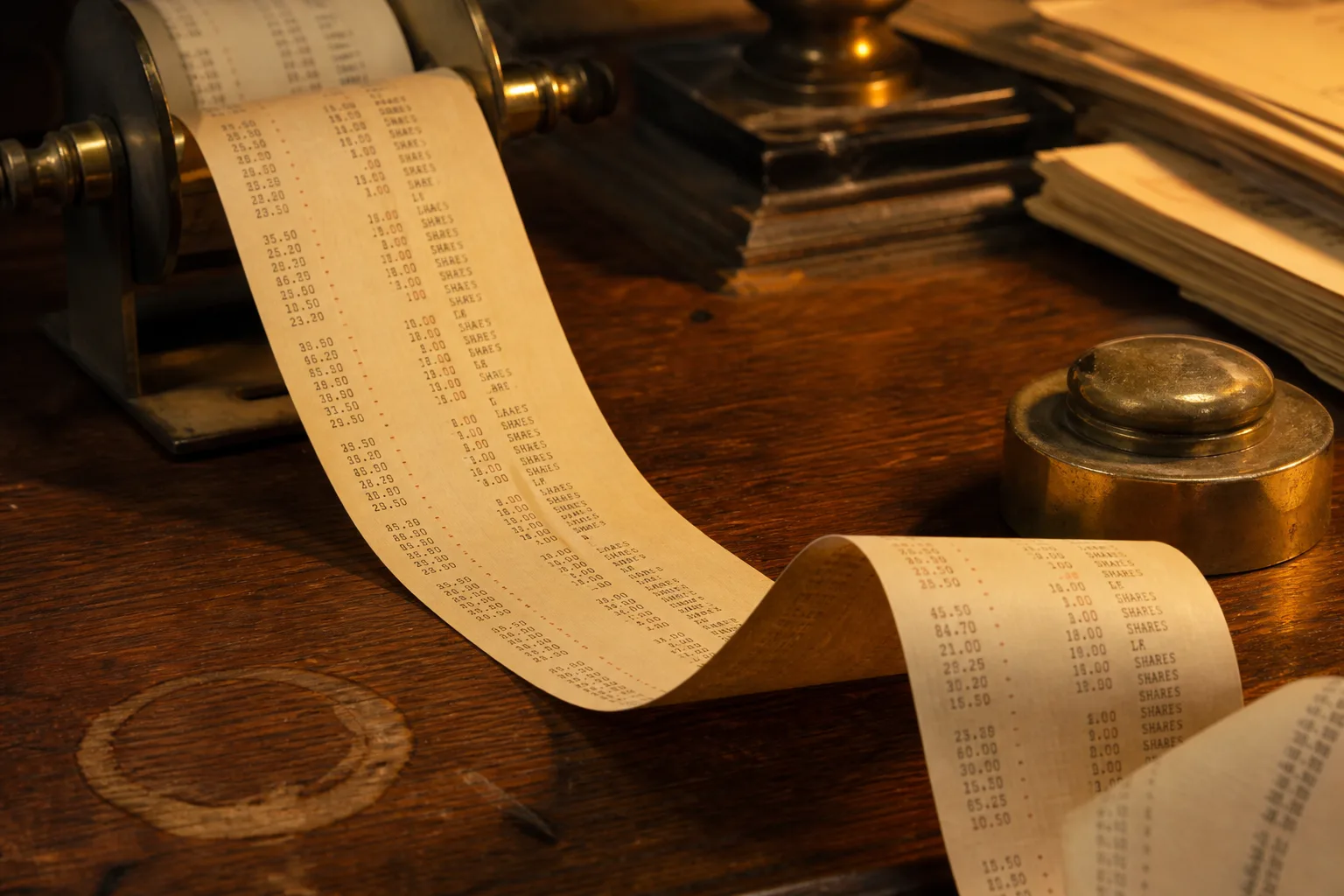
We grow up on charts. A candle closes where trades printed, not where a bid sat unused. So the last sale becomes the star, and the bid becomes a footnote. That habit is old. Ticker tape was a list of last sales too. It looked complete. It was never the book.
A sleepy name can show a last sale from twenty minutes ago. A busy name can show a last sale that was 40 shares and never coming back. Either way, you are looking at a memory.
Size is the part nobody says out loud
A bid of 48.18 for 100 shares is not a bid of 48.18 for 8,000. If you dump 2,000 shares into that 100-share bid, you are not “getting 48.18.” You are walking through whatever is left. Your fills can print lower while the last-trade marker still shows 48.20, because that 48.20 was a different trade.
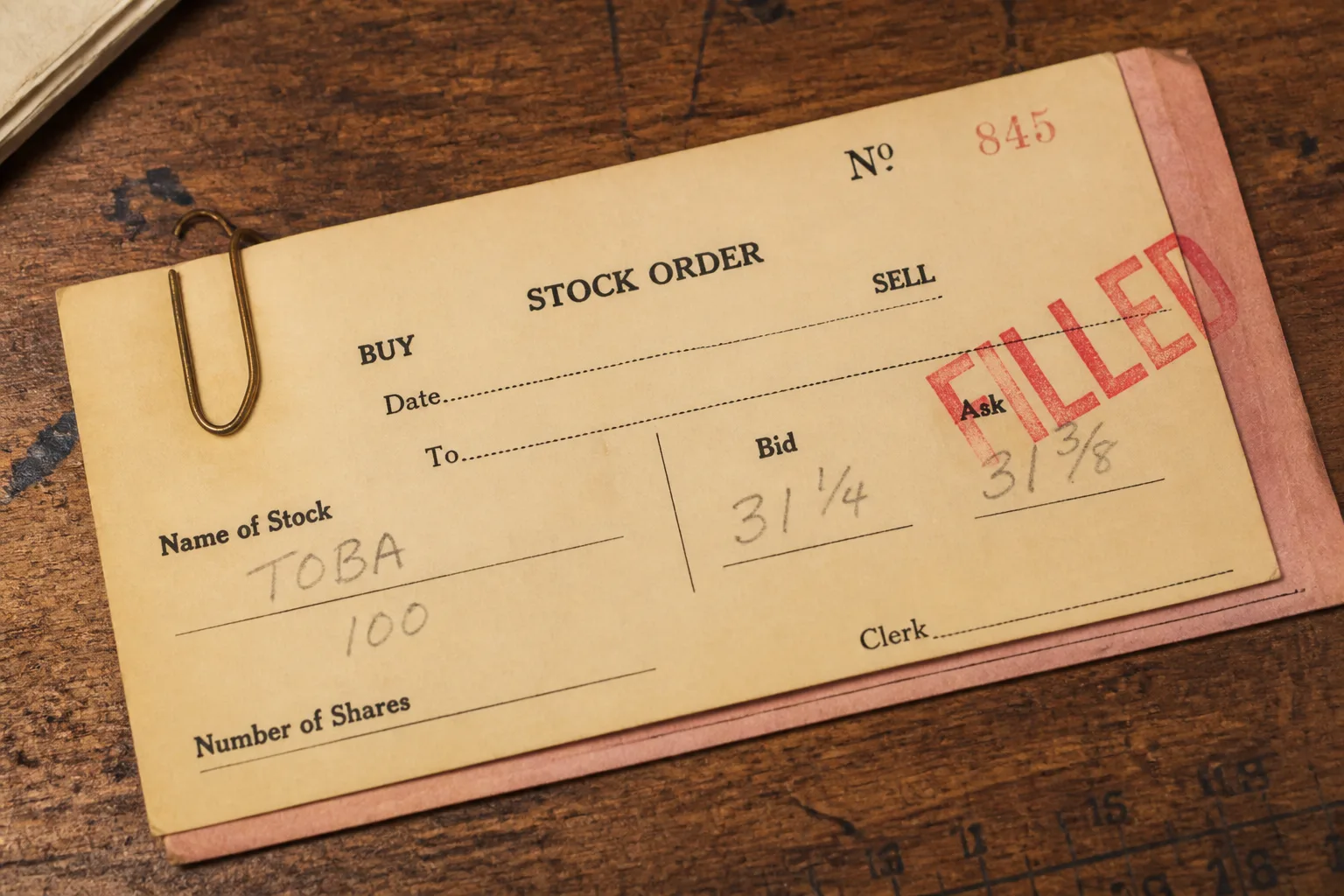
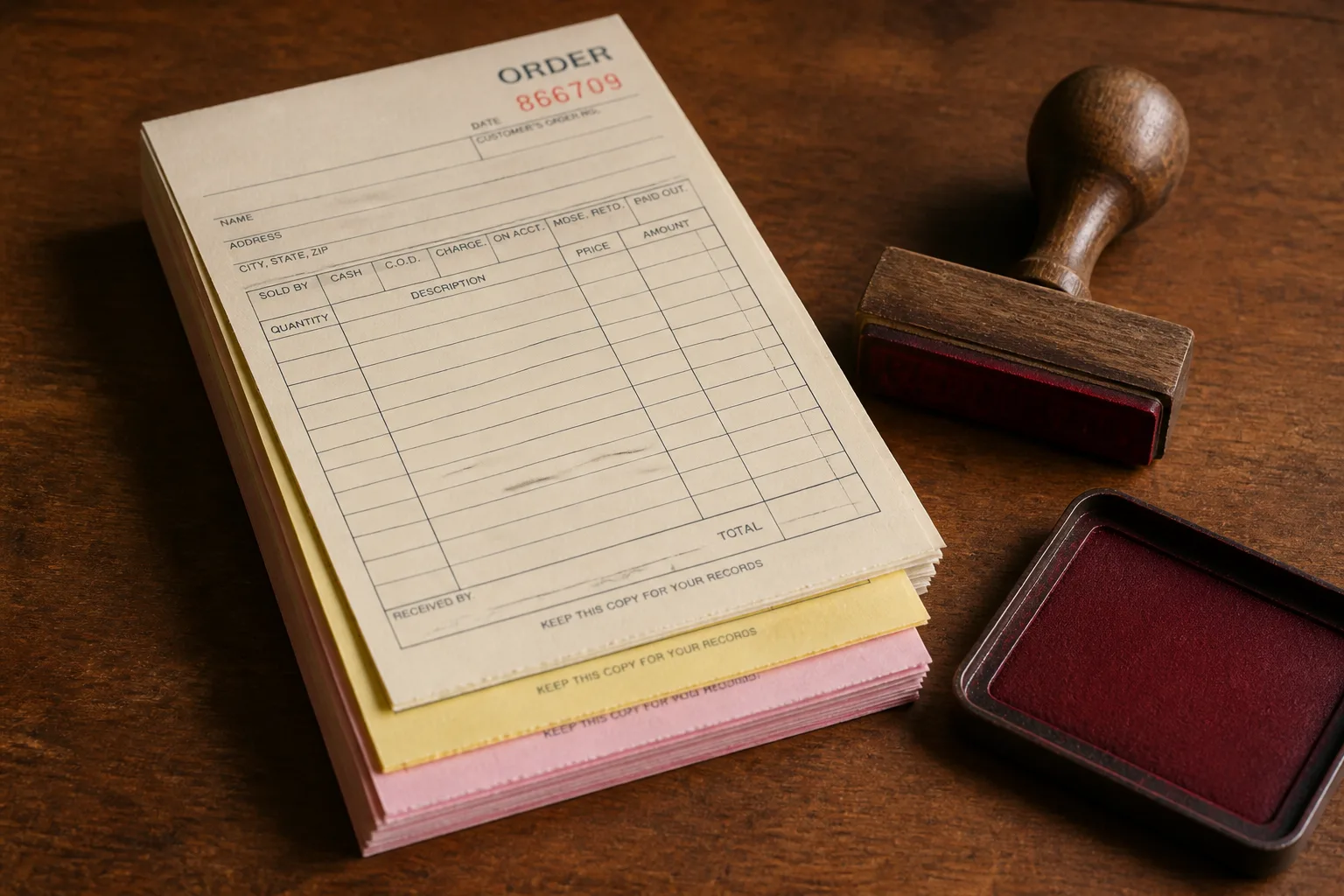
Old tickets made you write it down: buy or sell, the limit, the size. A filled stamp meant a match happened. It did not promise the next buyer would pay the same.
After the burst
Trades can fly, then the bids vanish. The last print is still 48.20. The live bid is 47.90. The live ask is 48.35. Calling 48.20 “the price” in that moment is nostalgia. Paper on the floor is not a bid.
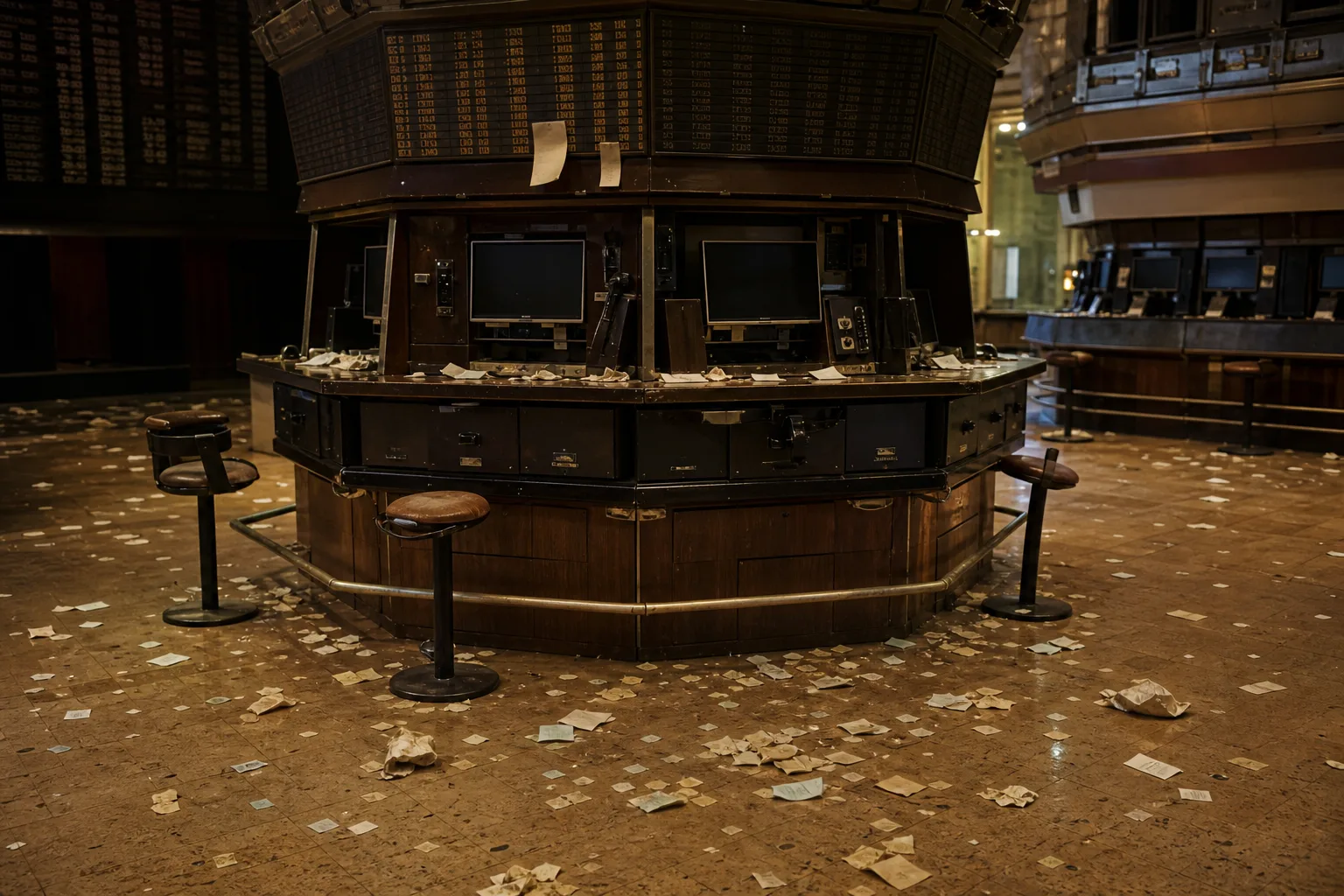
Here is a boring, useful example. Last sale: 31.25 on 200 shares. Live bid: 31.20 for 300. Live ask: 31.38 for 500.
If you want to sell, 31.25 is not waiting for you. The buyer who showed up will pay 31.20, and only for 300. If you want to buy, you do not get “the last price.” You pay 31.38, unless a new seller walks in.
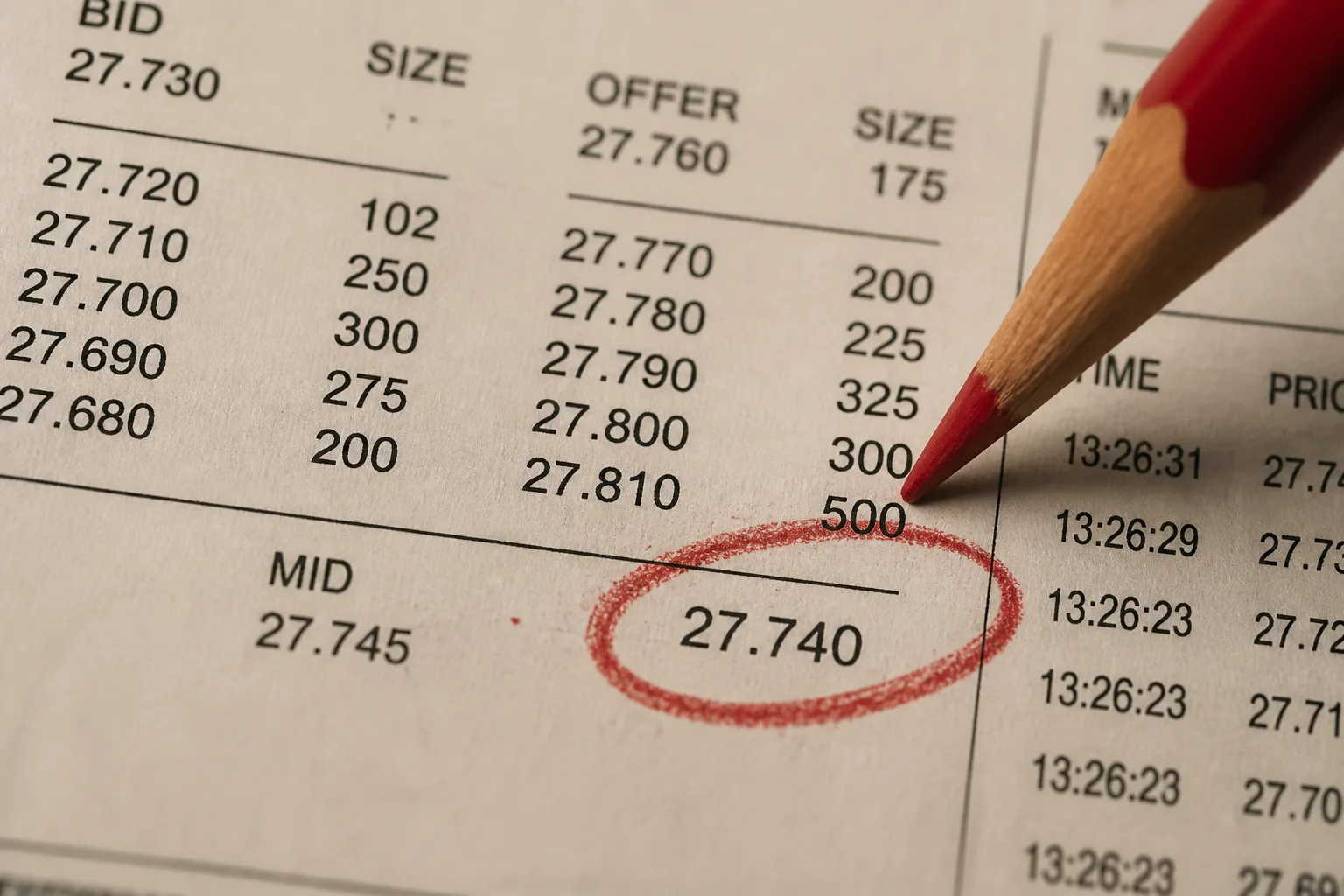
Look at four fields first: bid, bid size, ask, ask size. Then look at last sale the way you look at last night’s box score. It happened. It is not an offer.
Educational only · Not investment advice